
How Much Does a Warehouse Inventory Drone Cost? What Really Drives the Business Case
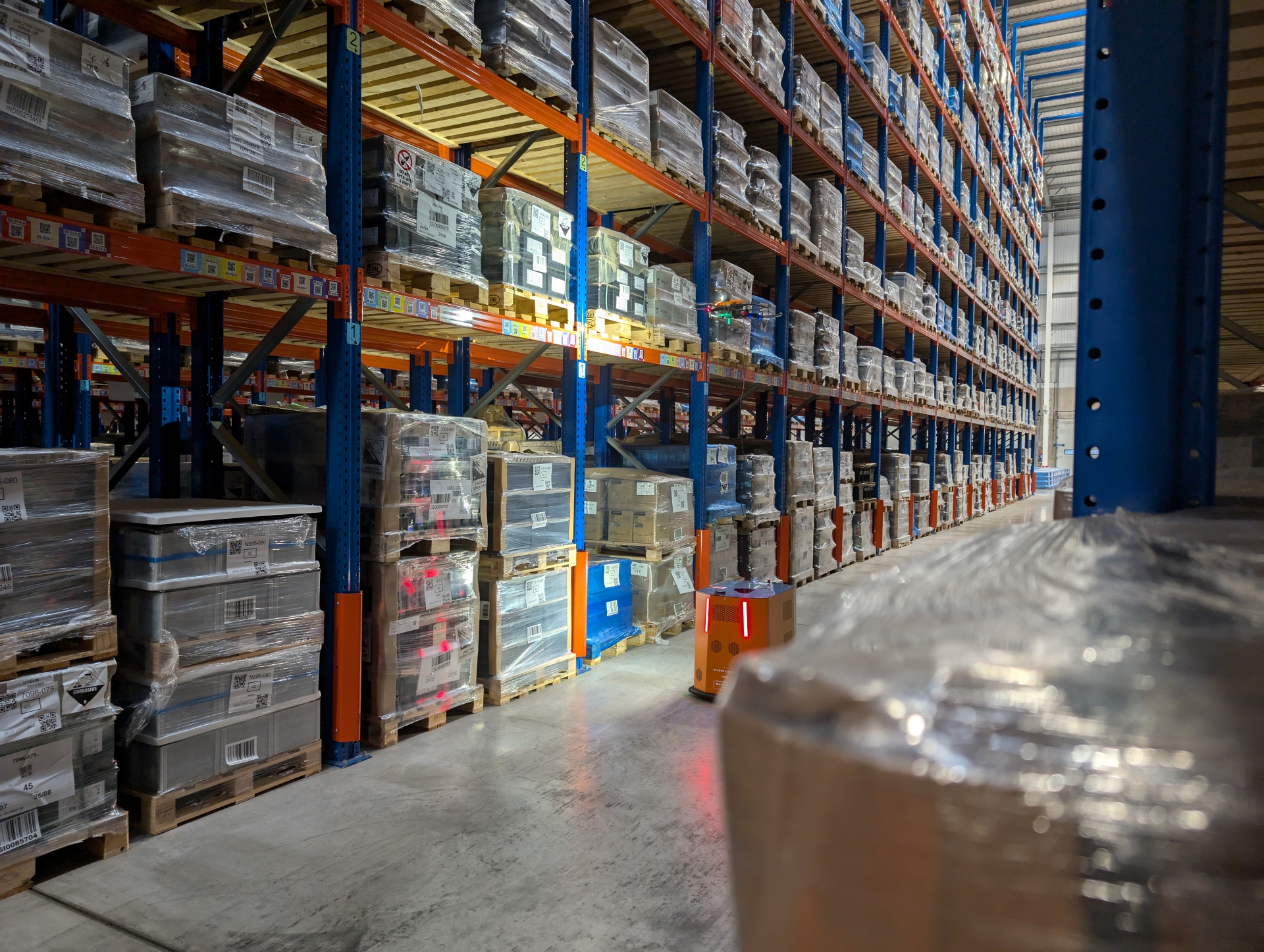
“How much does a warehouse inventory drone cost?” is a perfectly reasonable question. It is also one of the easiest questions to answer badly.
A warehouse drone is not useful because it flies. It is useful if it can repeatedly capture the right physical inventory data, associate it with the correct warehouse location, compare that observation with the WMS or ERP record and do it reliably enough to become part of normal operations.
That means the real cost is shaped by much more than the hardware. Warehouse layout, barcode quality, integration, the number of locations to be checked, operating windows and the level of ongoing support can all change the commercial model. For that reason, a single headline price rarely tells a warehouse operator whether a project makes sense.
Start with the job you are trying to automate
Before comparing quotes, define the inventory-control problem. A site that wants to check 4,000 straightforward pallet positions twice a week is a different proposition from a multi-building operation with high-bay racking, mixed identifiers and tens of thousands of locations.
The first question should therefore be: what physical verification needs to happen, how often, and what happens today when it does not happen?
- How many pallet locations are in scope?
- How frequently do those locations need to be physically checked?
- How much of the racking requires scissor lifts or other access equipment?
- Which identifiers need to be captured?
- What does the WMS or ERP expect to receive back?
- What happens operationally when a discrepancy is found?
The main factors that influence warehouse inventory drone cost
The technology itself matters, but so does everything required to make it dependable in a live warehouse. In practice, five areas usually shape the commercial scope:
- Warehouse size and complexity. Longer aisles, multiple buildings, restricted routes and complex layouts affect mapping, coverage and deployment design.
- Identifier quality. Consistent pallet barcodes are easier to automate than damaged, poorly positioned or mixed identifier formats. Optical Character Recognition (OCR) or additional image analysis may be required where human-readable text forms part of the process.
- Integration. A simple export is very different from an automated two-way workflow involving WMS or ERP data, exception handling and agreed system interfaces.
- Coverage and frequency. Checking a warehouse once a month creates a different capacity requirement from checking a large proportion of it every few days.
- Operating model. Buying hardware alone is not the same as using a managed service in which the supplier remains responsible for monitoring, software, support and system performance.
Do not compare the drone with “doing nothing”
The most common mistake in an automation business case is to compare the project cost with zero. The current process is not free.
Manual inventory verification already consumes labour, access equipment, supervision and operating time. In many warehouses the larger cost appears later, in the form of: emergency searches, delayed picks, recounts, customer disputes, write-offs and management time spent trying to understand why the physical stock no longer matches the system record.
Those costs are often distributed across different departments, which is why they can be difficult to see in one budget line.
- Direct counting labour and overtime
- Scissor-lift or MHE usage for high-level checks
- Warehouse shutdowns or restricted operating windows
- Recounts and ad-hoc searches for missing pallets
- Investigation of customer or internal inventory disputes
- Audit preparation and evidence gathering
- The operational impact of a pick failing because stock is not where the WMS expects it to be
CAPEX purchase or managed service?
This is another reason a single “drone price” can be misleading. Some warehouse automation projects are purchased as equipment. Others are deployed through a service model that includes the technology, implementation, monitoring, software and ongoing support.
For an operations team, the second model can be easier to evaluate because the commercial question becomes less about owning and operating a piece of robotics and more about buying a defined verification capability over time.
RAWview Assure is built around that managed service principle: the autonomous system is deployed at the customer’s warehouse, while RAWview remains responsible for managing, monitoring and supporting the service.
What should go into the business case?
A credible business case does not need heroic savings assumptions. It needs a defensible baseline.
Start with the cost and coverage of the current verification process, then add the operational exposure that exists between checks. The aim is not to invent a theoretical saving; it is to understand what the warehouse is already spending and what risk it is already carrying.
- Current labour hours spent on stocktakes and cycle counts
- Frequency and percentage of warehouse locations physically checked
- Access-equipment and out-of-hours costs
- Average time spent investigating discrepancies
- Frequency of emergency searches, recounts or failed picks linked to stock location
- Cost of customer disputes, write-offs or SLA exposure where this can be evidenced
- What improvement in verification frequency and coverage would actually be valuable
Ultimately, the commercial case is strongest when the investment can be tied to measurable improvements in warehouse inventory accuracy, coverage and exception handling.
The better question to ask a supplier
Instead of asking only “what does the drone cost?”, ask what level of inventory verification the proposed solution will deliver in your warehouse and what's included in the commercial scope.
A useful proposal should make the assumptions visible: coverage, operating window, expected identifier quality, integrations, support responsibilities and how exceptions are handled. If those points are vague, the headline price is not especially useful.
Concluding thoughts
It you or your business are considering warehouse inventory drones? Start by assessing the strength of your current inventory controls with our free Inventory Assurance Health Check, or book an Inventory Assurance Review to discuss the operating scope and business case for your warehouse.

“How much does a warehouse inventory drone cost?” is a perfectly reasonable question. It is also one of the easiest questions to answer badly.
A warehouse drone is not useful because it flies. It is useful if it can repeatedly capture the right physical inventory data, associate it with the correct warehouse location, compare that observation with the WMS or ERP record and do it reliably enough to become part of normal operations.
That means the real cost is shaped by much more than the hardware. Warehouse layout, barcode quality, integration, the number of locations to be checked, operating windows and the level of ongoing support can all change the commercial model. For that reason, a single headline price rarely tells a warehouse operator whether a project makes sense.
Start with the job you are trying to automate
Before comparing quotes, define the inventory-control problem. A site that wants to check 4,000 straightforward pallet positions twice a week is a different proposition from a multi-building operation with high-bay racking, mixed identifiers and tens of thousands of locations.
The first question should therefore be: what physical verification needs to happen, how often, and what happens today when it does not happen?
- How many pallet locations are in scope?
- How frequently do those locations need to be physically checked?
- How much of the racking requires scissor lifts or other access equipment?
- Which identifiers need to be captured?
- What does the WMS or ERP expect to receive back?
- What happens operationally when a discrepancy is found?
The main factors that influence warehouse inventory drone cost
The technology itself matters, but so does everything required to make it dependable in a live warehouse. In practice, five areas usually shape the commercial scope:
- Warehouse size and complexity. Longer aisles, multiple buildings, restricted routes and complex layouts affect mapping, coverage and deployment design.
- Identifier quality. Consistent pallet barcodes are easier to automate than damaged, poorly positioned or mixed identifier formats. Optical Character Recognition (OCR) or additional image analysis may be required where human-readable text forms part of the process.
- Integration. A simple export is very different from an automated two-way workflow involving WMS or ERP data, exception handling and agreed system interfaces.
- Coverage and frequency. Checking a warehouse once a month creates a different capacity requirement from checking a large proportion of it every few days.
- Operating model. Buying hardware alone is not the same as using a managed service in which the supplier remains responsible for monitoring, software, support and system performance.
Do not compare the drone with “doing nothing”
The most common mistake in an automation business case is to compare the project cost with zero. The current process is not free.
Manual inventory verification already consumes labour, access equipment, supervision and operating time. In many warehouses the larger cost appears later, in the form of: emergency searches, delayed picks, recounts, customer disputes, write-offs and management time spent trying to understand why the physical stock no longer matches the system record.
Those costs are often distributed across different departments, which is why they can be difficult to see in one budget line.
- Direct counting labour and overtime
- Scissor-lift or MHE usage for high-level checks
- Warehouse shutdowns or restricted operating windows
- Recounts and ad-hoc searches for missing pallets
- Investigation of customer or internal inventory disputes
- Audit preparation and evidence gathering
- The operational impact of a pick failing because stock is not where the WMS expects it to be
CAPEX purchase or managed service?
This is another reason a single “drone price” can be misleading. Some warehouse automation projects are purchased as equipment. Others are deployed through a service model that includes the technology, implementation, monitoring, software and ongoing support.
For an operations team, the second model can be easier to evaluate because the commercial question becomes less about owning and operating a piece of robotics and more about buying a defined verification capability over time.
RAWview Assure is built around that managed service principle: the autonomous system is deployed at the customer’s warehouse, while RAWview remains responsible for managing, monitoring and supporting the service.
What should go into the business case?
A credible business case does not need heroic savings assumptions. It needs a defensible baseline.
Start with the cost and coverage of the current verification process, then add the operational exposure that exists between checks. The aim is not to invent a theoretical saving; it is to understand what the warehouse is already spending and what risk it is already carrying.
- Current labour hours spent on stocktakes and cycle counts
- Frequency and percentage of warehouse locations physically checked
- Access-equipment and out-of-hours costs
- Average time spent investigating discrepancies
- Frequency of emergency searches, recounts or failed picks linked to stock location
- Cost of customer disputes, write-offs or SLA exposure where this can be evidenced
- What improvement in verification frequency and coverage would actually be valuable
Ultimately, the commercial case is strongest when the investment can be tied to measurable improvements in warehouse inventory accuracy, coverage and exception handling.
The better question to ask a supplier
Instead of asking only “what does the drone cost?”, ask what level of inventory verification the proposed solution will deliver in your warehouse and what's included in the commercial scope.
A useful proposal should make the assumptions visible: coverage, operating window, expected identifier quality, integrations, support responsibilities and how exceptions are handled. If those points are vague, the headline price is not especially useful.
Concluding thoughts
It you or your business are considering warehouse inventory drones? Start by assessing the strength of your current inventory controls with our free Inventory Assurance Health Check, or book an Inventory Assurance Review to discuss the operating scope and business case for your warehouse.
Client Testimonial


